- +1 (888) 990-7177
- monarchcontractors@mail.com
- 501 Cambria Avenue Bensalem, PA 19020

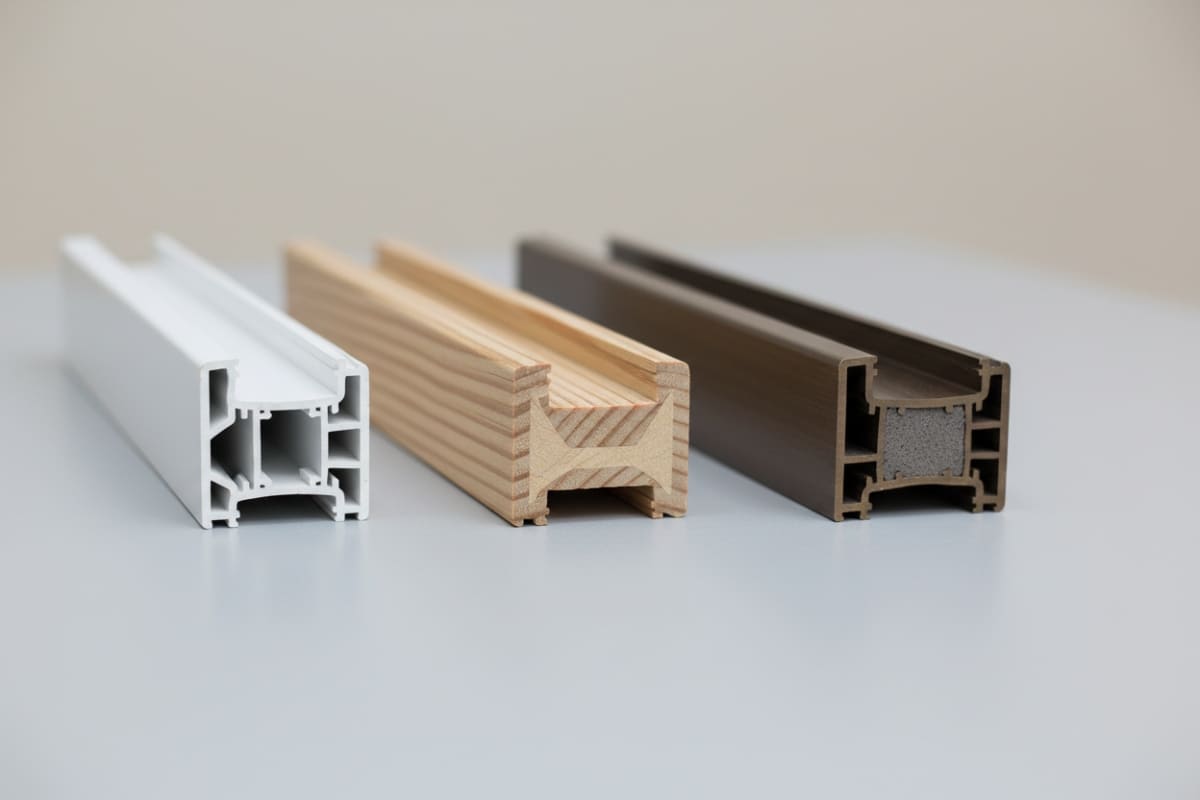
Choosing a window frame material is the single biggest decision in any replacement project — it determines insulation performance, maintenance workload, and what you pay per opening. The right answer also depends on where you live. A frame that performs well in a Cherry Hill colonial faces different stresses in a Pocono Pines cabin at 2,000 feet of elevation.
Monarch Contractors has installed over 250,000 windows across Pennsylvania and New Jersey since 1991 (PA license #187000, NJ license #13VH13150900). This guide compares vinyl, wood, and fiberglass frames using the criteria that actually matter in our climate: U-factor, lifespan, freeze-thaw resistance, and installed cost.
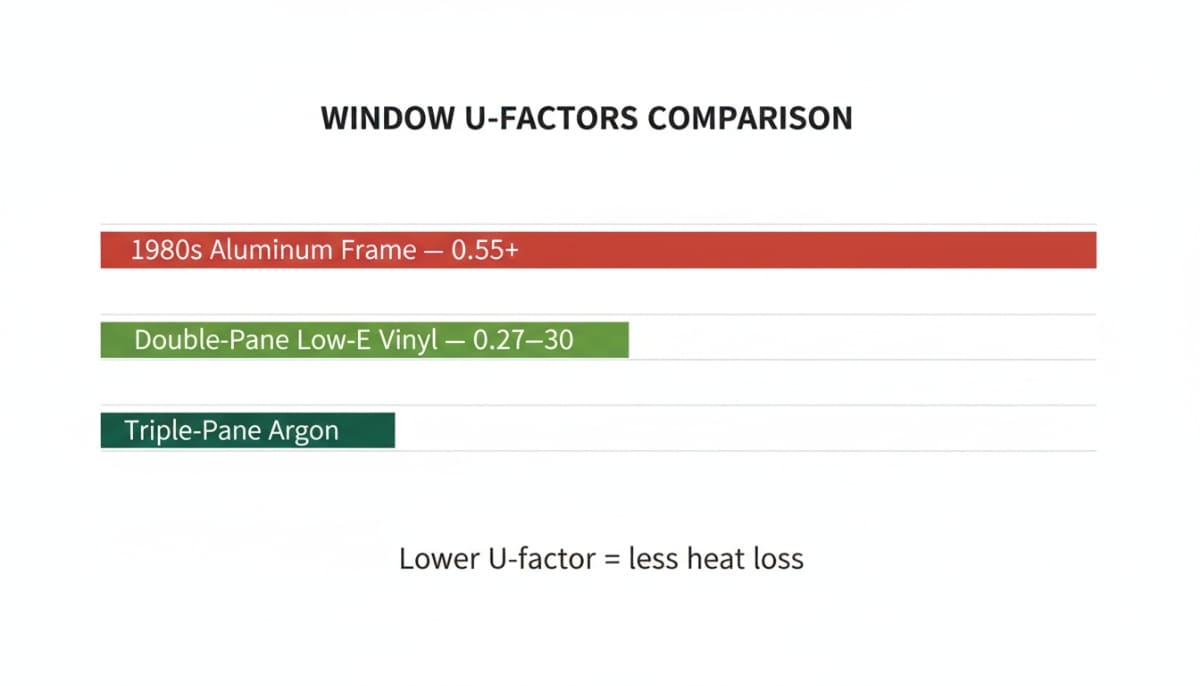
The frame accounts for 15–25% of a window’s total surface area. As a result, even the best glass package underperforms in a poorly insulating frame. Performance is measured by U-factor — the rate of heat transfer through the entire window assembly. Lower is better.
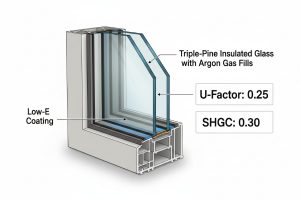
For reference: aluminum-frame windows from the 1970s–80s, still common in homes across Levittown and Pennsauken, typically run a U-factor of 0.55 or higher. A modern double-pane low-E vinyl window with argon fill achieves 0.27–0.30. That is roughly half the heat loss. Triple-pane units reach approximately 0.20 — a meaningful difference for heating bills in the Poconos.
Vinyl frames are extruded from uPVC with internal multi-chamber construction. Those air chambers are the key: they interrupt heat transfer the same way layered clothing does. Modern vinyl is the most installed replacement frame material in the Delaware Valley, and for measurable reasons.
First, thermal performance per dollar is unmatched. An Energy Star certified vinyl window with low-E argon-filled glass delivers a 0.27–0.30 U-factor at the lowest installed price of the three materials. In the Philadelphia area, vinyl replacement typically runs $329–$878 per window, including installation; prices vary by location and project scope.
Second, vinyl is inert. It does not rot, rust, or absorb moisture — relevant in South Jersey, where year-round humidity off the Delaware River destroys unmaintained wood. Maintenance is limited to washing with mild soap and water. No painting, no sealing, no scraping.
Vinyl expands and contracts with temperature swings more than fiberglass does. In practice, this matters only with budget-grade extrusions: thin-walled frames can warp over repeated freeze-thaw cycles. Heavier-gauge uPVC with welded corners — the construction standard in the Okna windows we install — is engineered specifically for this stress. Color selection is also narrower than paintable wood, although factory-applied exterior finishes now carry a 10-year warranty against peeling and UV discoloration.
Wood remains the reference material for architectural authenticity. It insulates naturally, takes any paint or stain, and is often the only acceptable option in regulated historic districts.
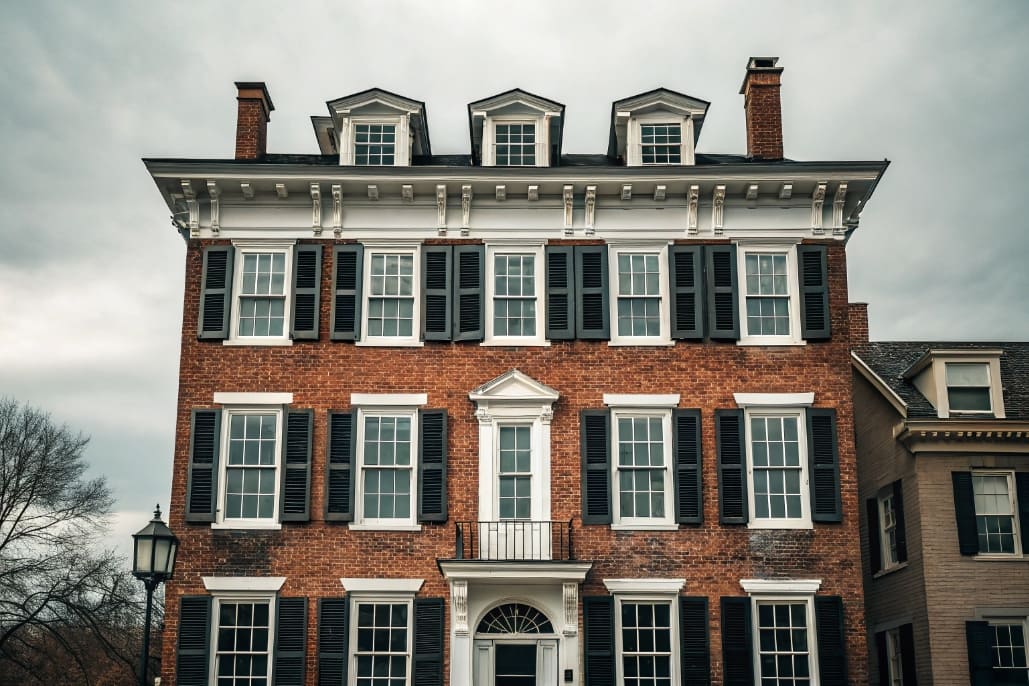
No synthetic frame fully replicates the depth of real wood grain, which is why wood dominates in premium and preservation work. In districts with Historical Architectural Review Boards — Philadelphia’s historic neighborhoods, Doylestown, Stroudsburg’s Academy Hill — a Certificate of Appropriateness may require period-accurate profiles, and wood (or wood-look historic replacement units) is frequently the approved path. Thermally, wood performs well: its natural insulating value is comparable to quality vinyl.
Maintenance is the deciding factor. Wood requires repainting or resealing every 4–7 years in our climate. Skip a cycle, and moisture intrusion starts the rot process — we see this constantly during estimates in older South Jersey housing stock. Wood is also the most expensive option: typically 1.5–3 times the installed cost of a comparable vinyl unit, before ongoing maintenance is counted. Termites and carpenter ants add a further risk in wooded lots.
Fiberglass frames are pultruded from glass fibers in a resin matrix. The result is the strongest and most dimensionally stable frame material on the market.
Fiberglass expands at nearly the same rate as the glass it holds. Consequently, seal stress over decades of freeze-thaw cycling is minimal — a genuine engineering advantage in mountain climates. Expected service life runs 30–50 years with almost no maintenance, and the material resists UV, salt air, and extreme temperature swings. Most fiberglass frames are also paintable.
Cost is the obstacle. Fiberglass typically prices 30–60% above comparable vinyl while delivering similar U-factors, so the thermal payback over quality vinyl is marginal. Product availability is narrower: fewer manufacturers, fewer styles, and longer lead times for custom shapes. The rigidity that makes fiberglass durable also makes precise installation critical — an out-of-square install voids much of the performance benefit.
| Criterion | Vinyl | Wood | Fiberglass |
|---|---|---|---|
| Typical U-factor (double-pane low-E, argon) | 0.27–0.30 | 0.28–0.32 | 0.26–0.30 |
| Expected lifespan | 25–40 years | 20–40+ years (maintenance-dependent) | 30–50 years |
| Maintenance | Wash only | Repaint/reseal every 4–7 years | Wash only; repaint optional |
| Moisture & rot resistance | Excellent | Requires active protection | Excellent |
| Freeze-thaw stability | Good (quality extrusions) | Good | Excellent |
| Relative installed cost | $ (baseline) | $$$ (1.5–3× vinyl) | $$ (1.3–1.6× vinyl) |
| Historic district approval | Case-by-case | Most often approved | Case-by-case |
Mixed housing stock dominates here: 1950s Levittown ranchers, pre-war twins, and newer subdivisions in Horsham and Richboro. For the majority of these homes, high-performance vinyl delivers the best cost-to-benefit ratio. The exception is regulated historic property — in Philadelphia’s designated historic districts, confirm Historical Commission requirements before selecting material.
High year-round humidity and nor’easter exposure make moisture resistance the priority from Cherry Hill to Burlington. Vinyl and fiberglass both handle these conditions well; unprotected wood does not. For homes closer to the coast, note that fiberglass and vinyl resist salt-air corrosion that degrades metal hardware and finishes.
Severe freeze-thaw cycling, heavy snow loads, and high heating costs define Monroe County. Here, the glass package matters as much as the frame: we specify triple-pane, argon-filled, low-E units (U-factor near 0.20) for year-round homes and vacation properties alike. Both premium vinyl and fiberglass frames perform reliably; the budget saved by choosing vinyl frames often funds the triple-pane upgrade, which typically adds $140–$260 per opening.
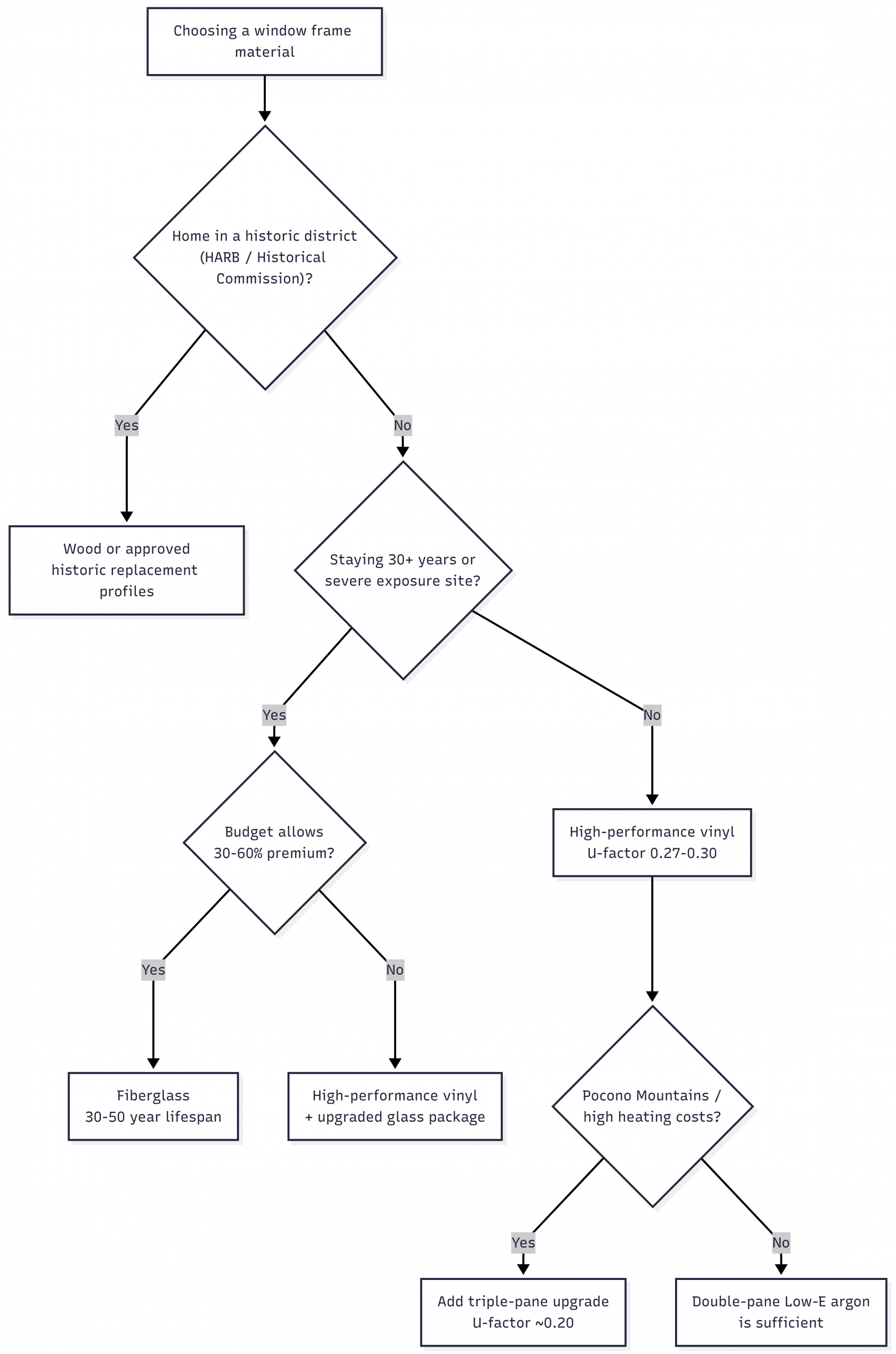
For most PA and NJ homes, high-performance vinyl is the rational choice: it matches fiberglass on U-factor, resists our region’s moisture, and costs meaningfully less — savings that go toward better glass, where the real efficiency gains live. Fiberglass earns its premium for owners planning 30+ years in the home or for severe-exposure sites. Wood is the answer when architecture or historic regulation demands it.
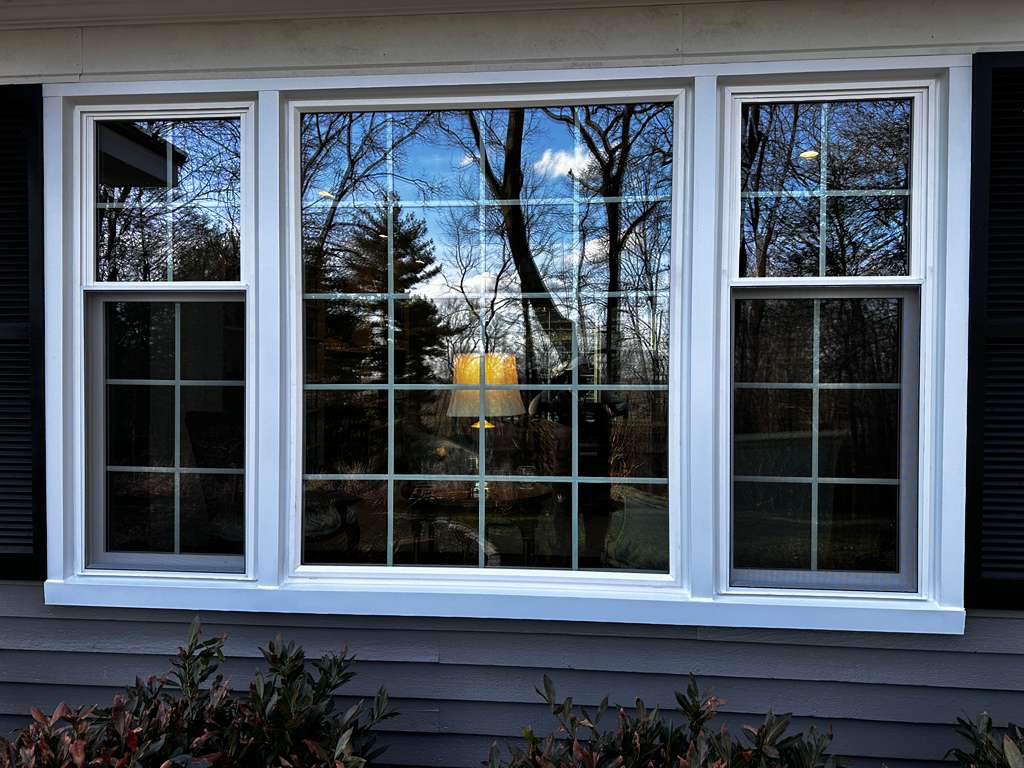
We install Okna premium vinyl windows, manufactured in Bristol, PA — the same county as our Bensalem headquarters. Local production shortens lead times on custom shapes by 4–8 weeks compared to out-of-state manufacturers. Every Okna window installation includes Okna’s lifetime limited warranty on the frame, sash, insulating glass unit, and hardware — fully transferable one time to the next homeowner — plus Monarch’s 10-year workmanship guarantee on installation labor.