Six architectural regions, two permit tracks, one crew. Federal rowhouses, Victorian twins, post-war ranches, Tudor estates — each gets OKNA uPVC vinyl windows specified to the era, not a stock catalog default.
PA-licensed since 1991. EZ Permit and Philadelphia Historical Commission filings handled in-house.
A 1745 Society Hill rowhouse, a 1925 South Philly twin, and a 1955 Northeast ranch all need different specs. We measure to the actual era — not a stock catalog.
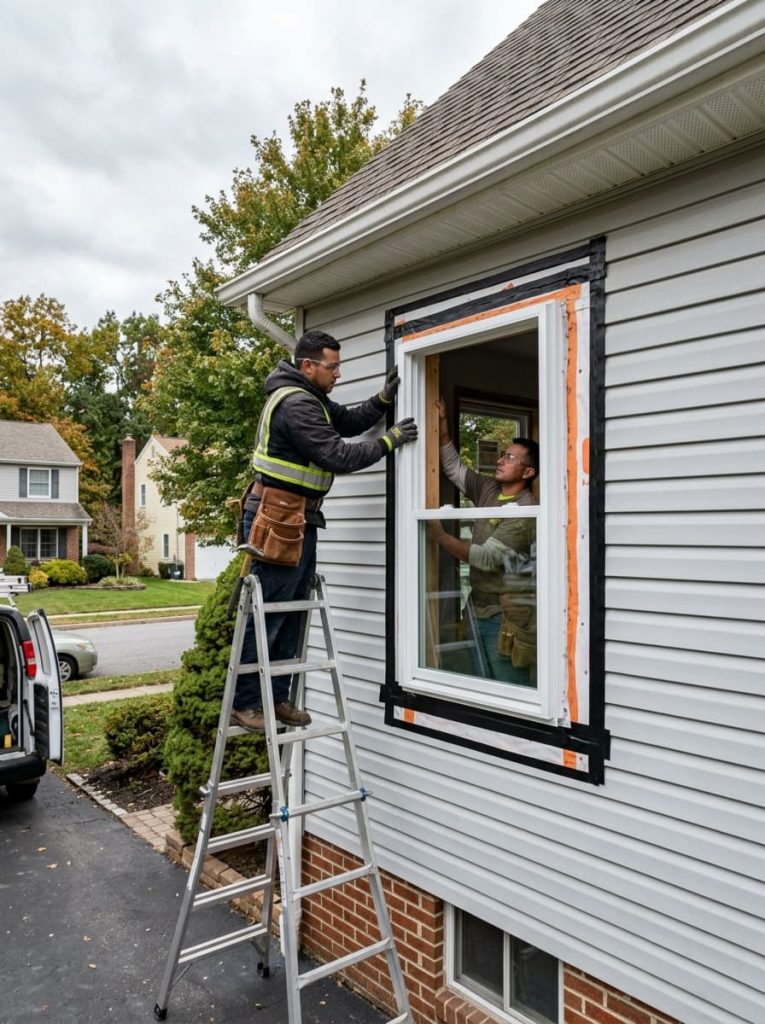
Measuring, permits, install, cleanup — all in-house. One window or eighteen, your project manager runs it from estimate to sign-off. No subcontractors.
EZ Permit for non-historic homes (same size, U-factor 0.35 or lower). PHC review for Philadelphia Register properties and historic districts. We confirm property status before filing — wrong track restarts the clock.
Federal proportions, Italianate transoms, Victorian bays, post-war ranches — each gets a different OKNA configuration. Measured to the opening, not the catalog.
OKNA lifetime limited warranty on frame, sash, IGU, and hardware — transferable once to the next owner. Monarch’s 10-year workmanship guarantee covers the install. Both transfer if you sell.
Most projects run one of two tracks. Non-historic homes with same-size, same-location replacements move through the EZ Permit process. Historic Register properties and homes inside designated districts route through the Philadelphia Historical Commission first. We confirm property status at the first visit.
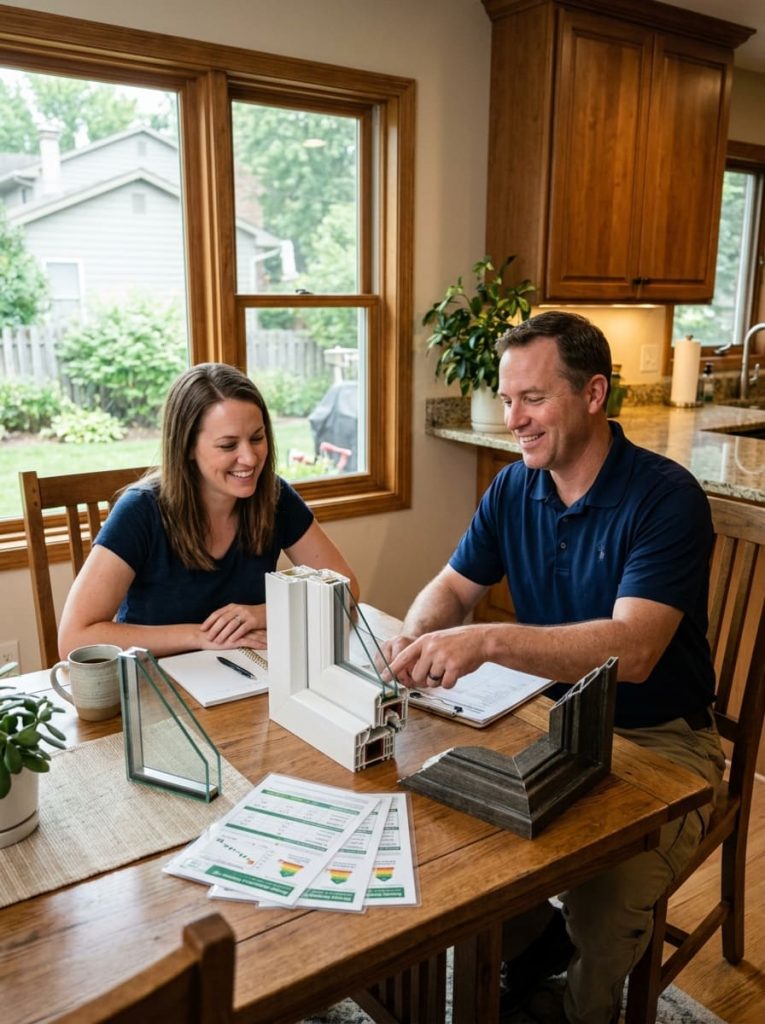
Federal row houses in Society Hill, Victorian rowhomes in Fishtown, 1920s-60s rowhouses across South and Northeast Philly, twins in Mount Airy, and Tudor estates in Chestnut Hill all share the same city but rarely share opening dimensions or wall construction. Each home gets its own pre-install verification before the first old unit comes out.
Three factors shape every project here: housing era, permit track, and city climate.
| Region | Era & Housing | Typical Failure |
|---|---|---|
| Center City, Old City | Federal & Georgian rowhouses, 1700s | Soft sills, masonry reveal — full-frame replacement |
| South Philly, Fishtown | Victorian rowhomes, 1880s-1920s | Paint-cycled sash, perimeter air leaks |
| Northeast Philly, Wynnefield, Overbrook | Rowhouses & twins, 1920s-60s | First-generation IGU seal failure |
| Mount Airy, Chestnut Hill | Tudor, Victorian, Colonial Revival estates | Oversized custom shapes, premium finishes |
The Philadelphia Historical Commission (PHC), founded in 1955, is the most active preservation body in Pennsylvania. PHC review applies to every property on the Philadelphia Register and inside districts like Society Hill, Old City, Queen Village, Germantown, Chestnut Hill, Fairmount, and Spruce Hill.
Wrong track = full restart. We confirm property status at the first visit.
Philadelphia sits in IECC Zone 4A — mixed-humid. Summer mid-90s, winter teens, year-round humidity swings. That cycling stresses seals harder than suburban markets.
Add narrow streets, party walls, third-floor dormers, and limited setup space — and Philadelphia metro labor runs 25-40% above national averages. Full breakdown in our Philadelphia cost guide. Neighboring markets like Cheltenham and Pennsauken follow different rules.
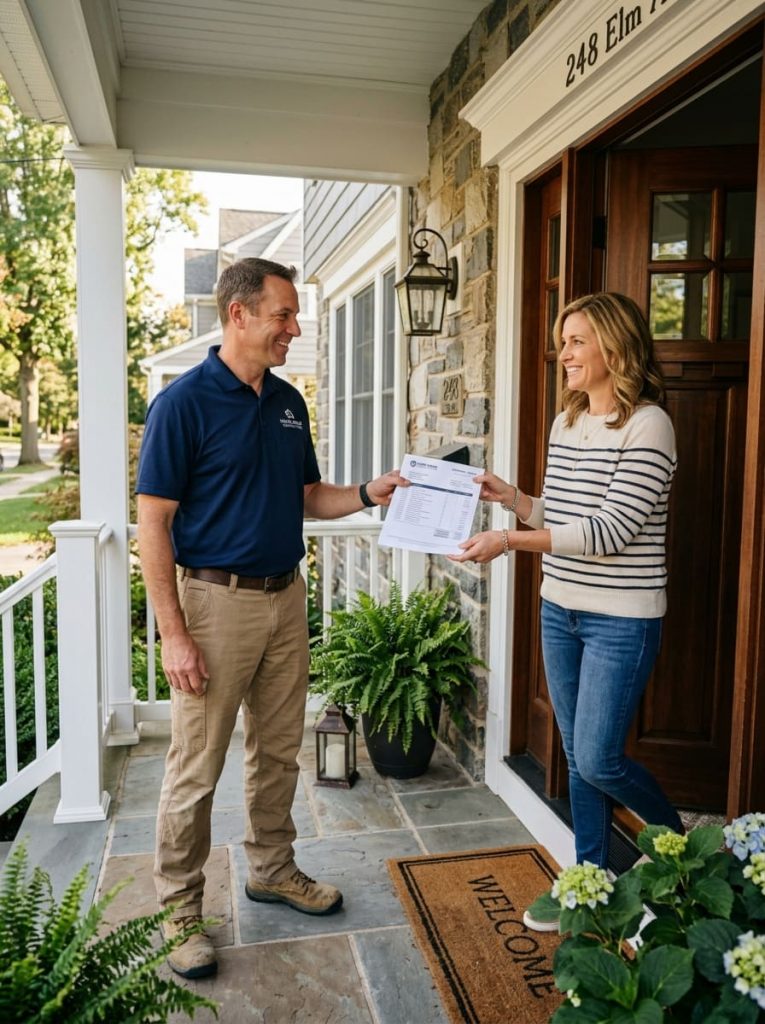
Pricing here scales with neighborhood era and permit track. EZ Permit projects on standard rowhouses sit at the practical baseline; PHC-approved historic projects with profile matching and full-frame work in Society Hill, Old City, and Chestnut Hill sit at the upper end. Philadelphia metro labor rates run 25 to 40 percent above national averages — pricing reflects that reality. All work includes installation, cleanup, permit handling under the correct track, and workmanship coverage.
| Service Type | Price Range (per window, installed) | Typical Application |
|---|---|---|
| EZ Permit insert replacement, double-pane Low-E | $525 – $925 | Non-historic rowhouses, twins, and post-war homes with sound frames |
| Full-frame replacement with sill and trim repair | $800 – $1,400 | Pre-1900 rowhouses, Federal-era homes, and Victorian properties |
| PHC documentation & Historical Commission review | Included in project planning | All Philadelphia Register properties and historic district homes |
| Period profile matching | +$90 – $200 per opening | Federal, Victorian, and Italianate facades in Society Hill, Old City, Bella Vista, Mount Airy |
| Custom shape (eyebrow, arched, transom, oversized) | $1,300 – $3,000 | Greek Revival eyebrow windows, Italianate transoms, Victorian bays in Chestnut Hill and Mount Airy |
| Triple-pane upgrade | +$160 – $260 per opening | Year-round residences prioritizing thermal performance and traffic-noise reduction |
| Third-floor and dormer access surcharge | +$100 – $250 per opening | Rowhouse third-floor windows and attic dormers requiring staging |
| Full-home replacement | $7,500 – $26,000 | Standard rowhouse through Chestnut Hill estate, depending on neighborhood, era, and permit track |
For a complete cost breakdown by neighborhood, home size, and material, see our Philadelphia window replacement cost guide.
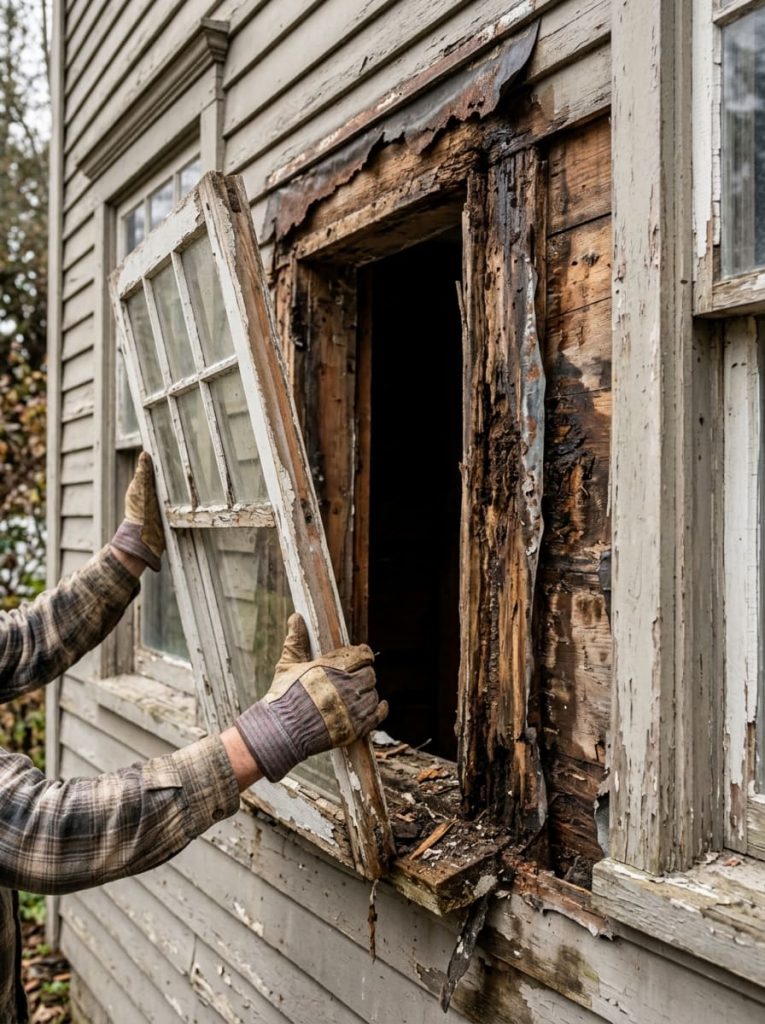
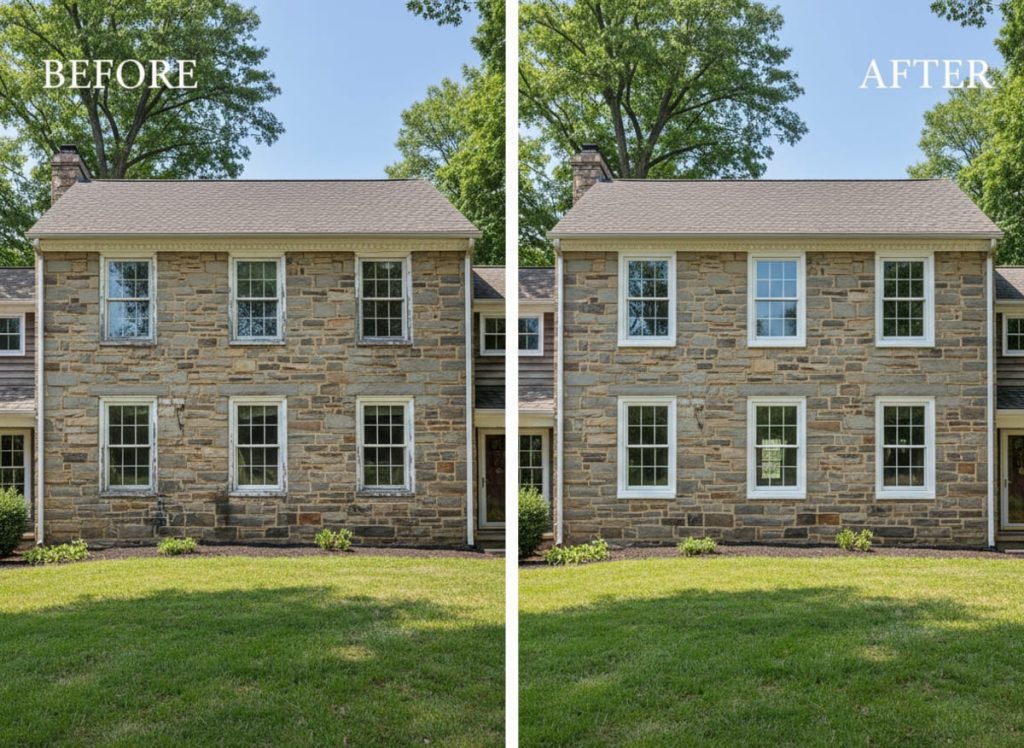
The project shown above is a late-1700s Federal-style rowhouse in the Society Hill Historic District with original tall narrow double-hung wood sash showing soft sills and air infiltration at the masonry reveal. After Philadelphia Historical Commission approval, replacement units were OKNA double-hung uPVC vinyl windows specified to match the original 6-over-6 grid and meeting rail position, with full-frame installation and sill repair on the front elevation.
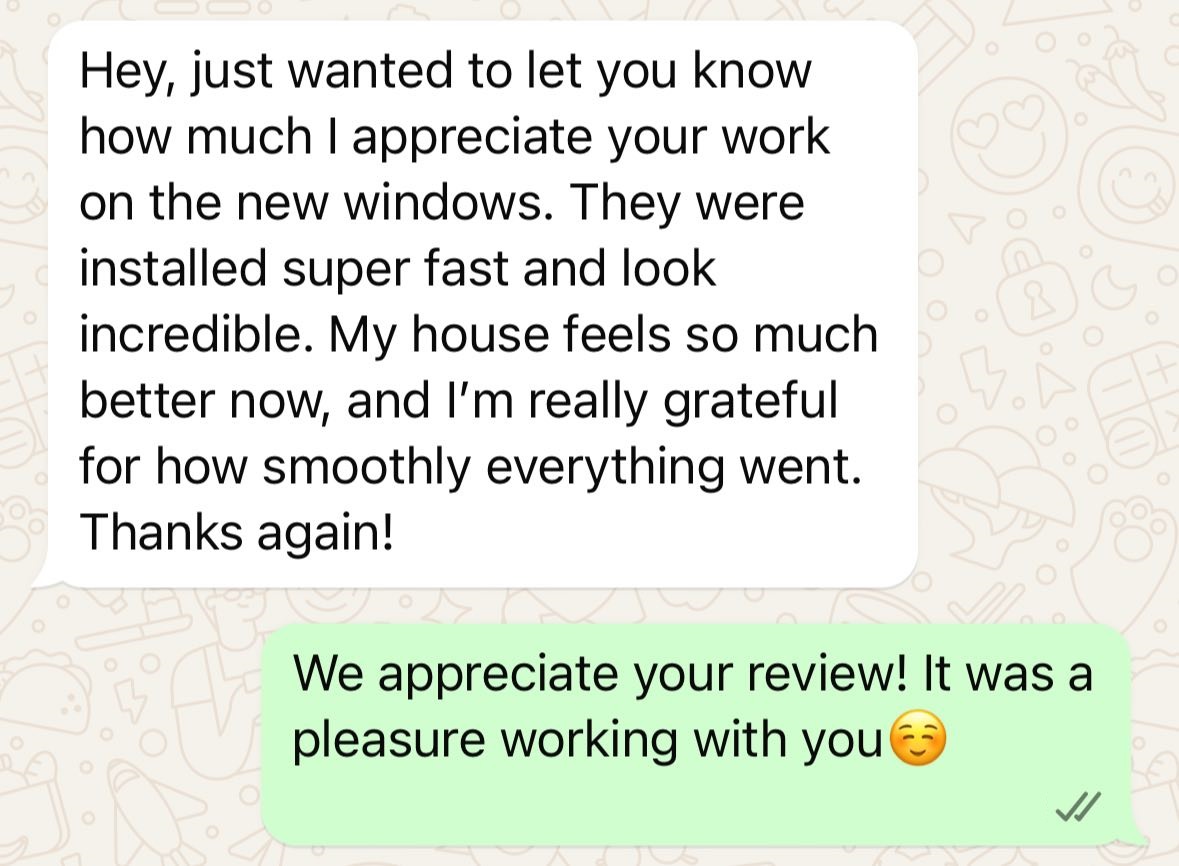
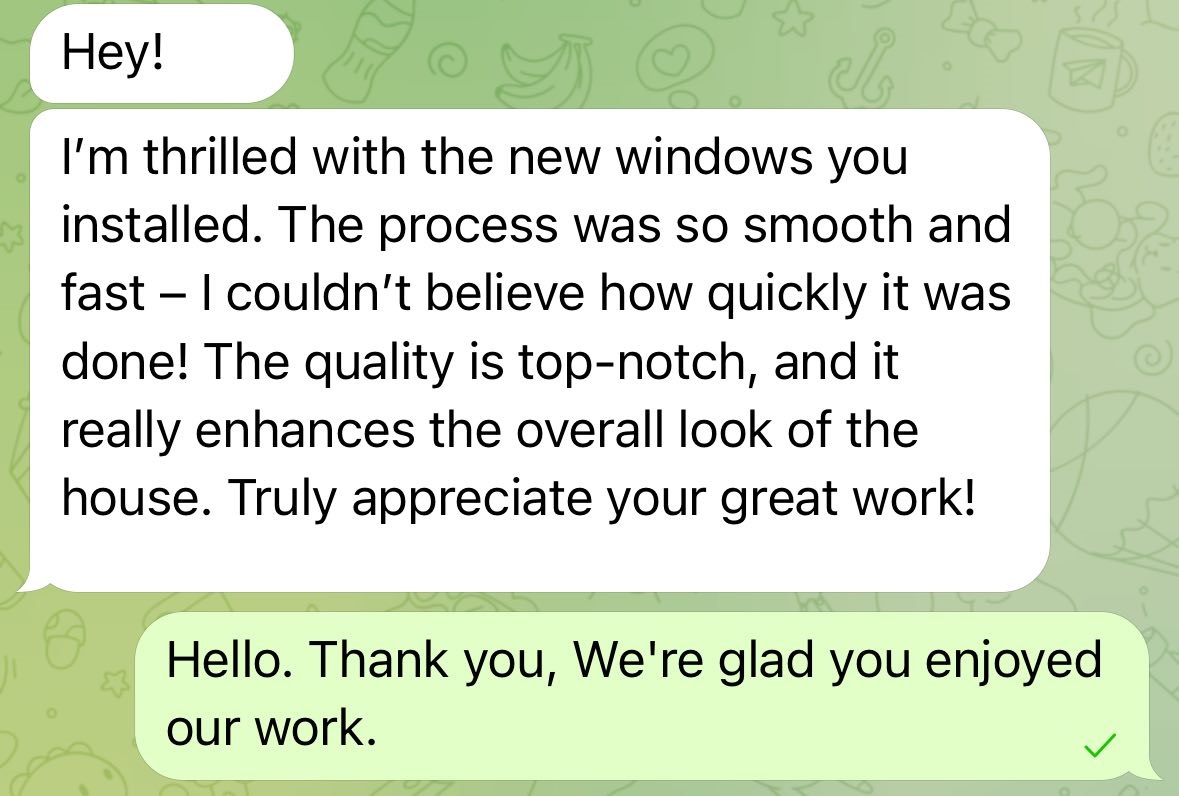
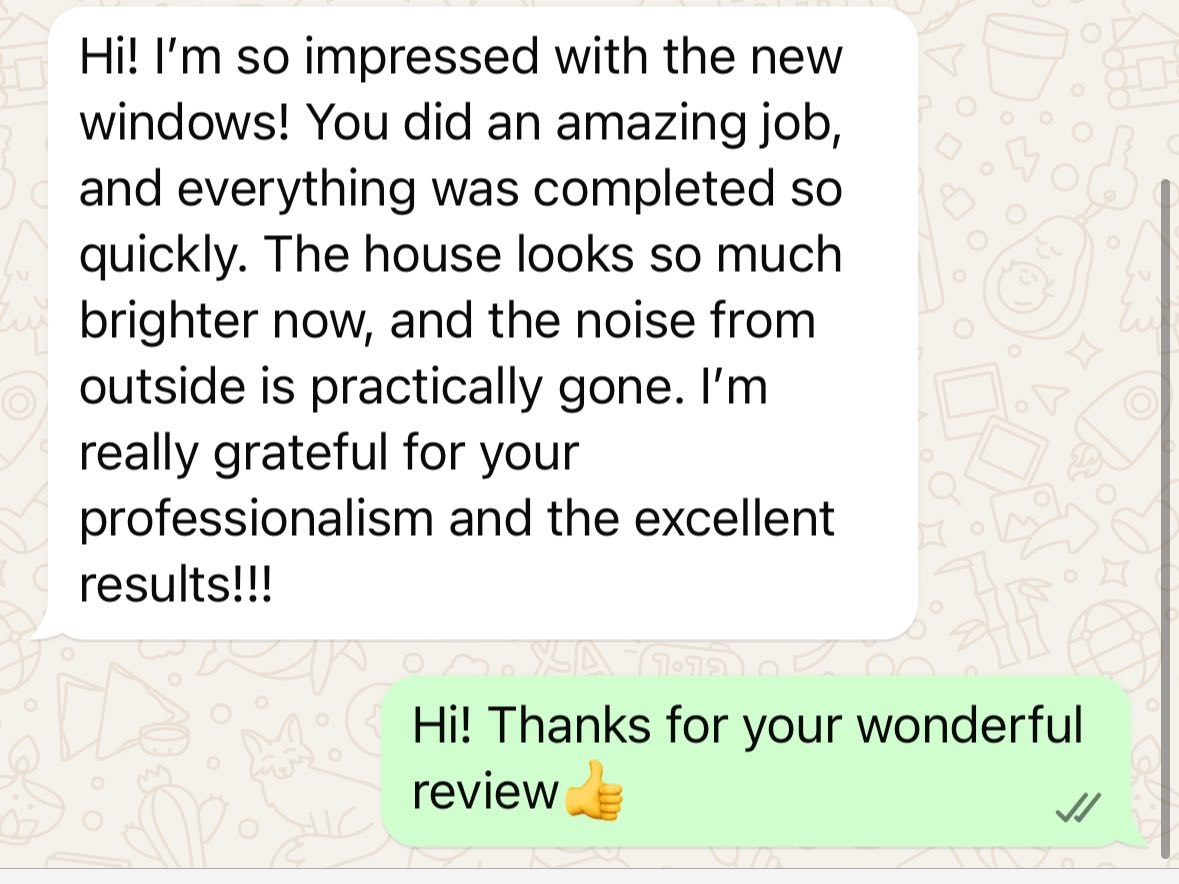
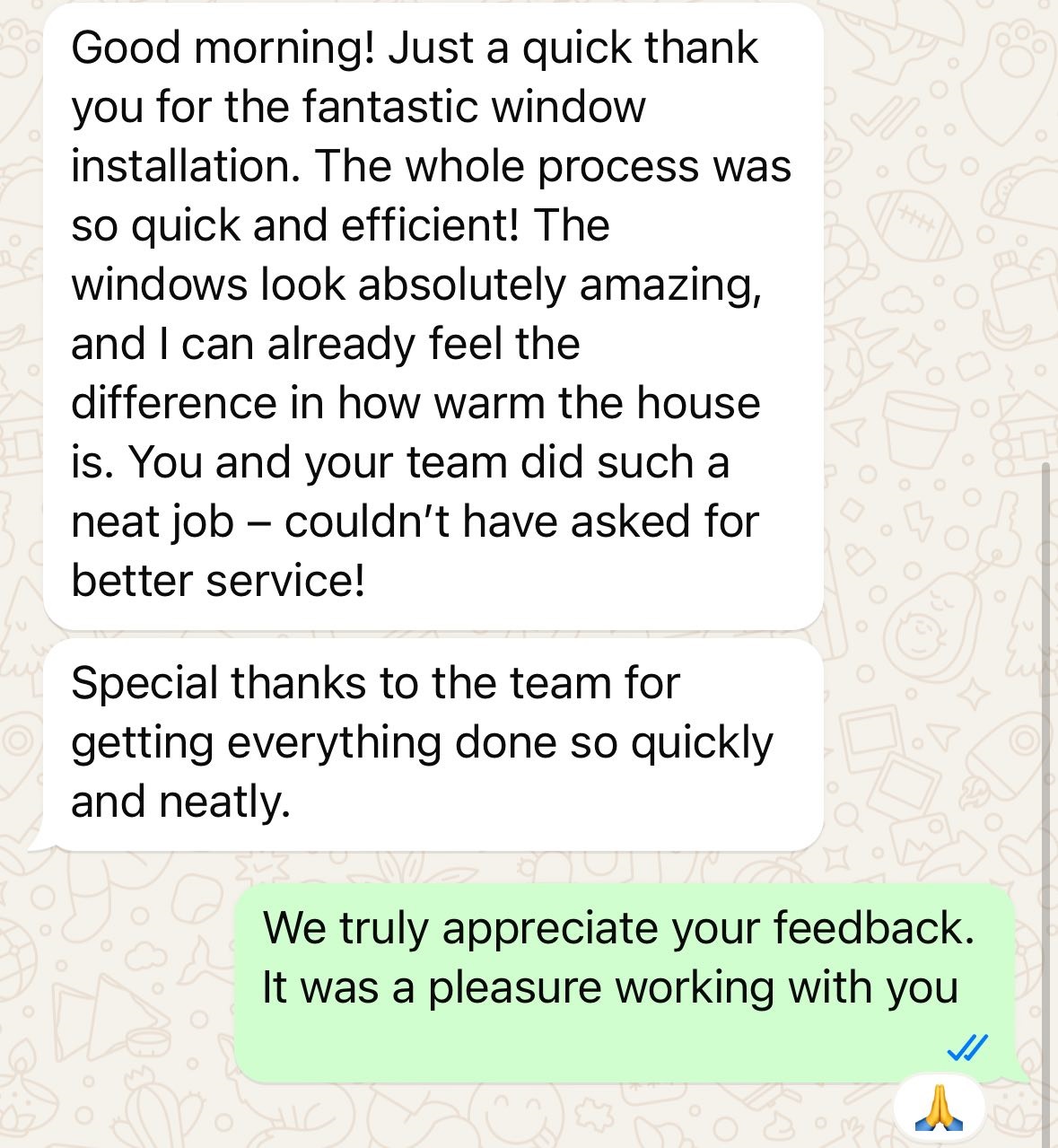
See feedback from city homeowners across every architectural region we serve — from PHC-approved Federal rowhouse projects in Society Hill and Old City, to Victorian rowhome replacements in Fishtown and Bella Vista, mid-century insert work across Northeast Philly and Wynnefield, and Tudor estate projects in Chestnut Hill and Mount Airy.
Ready to upgrade your windows? Contact us for a free, no-obligation quote. We’ll respond within 4 hours and help you choose the best window solutions for your property in PA or NJ.
Find answers to the most common questions about our window services. If you have any other questions or need more information, feel free to contact us directly.
In most cases, yes. The city offers an EZ Permit process for straightforward same-size, same-location replacements with a maximum U-factor of 0.32 — that covers most non-historic homes and processes quickly. Properties on the Philadelphia Register or inside designated historic districts route through the Philadelphia Historical Commission first; once PHC approval is in hand, the building permit issues through the Department of Licenses & Inspections. We confirm property status at the first visit and file under the correct track on your behalf.
Properties listed on the Philadelphia Register of Historic Places or located inside a designated historic district require PHC review for window replacement. Major districts include Society Hill, Old City, Queen Village, Germantown, parts of West Mount Airy, Chestnut Hill, Fairmount, Spruce Hill, and many others. Individual properties scattered across other neighborhoods are also on the Register. We verify status at the on-site visit and consult with PHC staff before quoting if there is any uncertainty.
Staff approves roughly 95 percent of applications within five days, often by email. The remaining 5 percent — typically major rehabilitation projects or proposals that staff cannot approve directly — route to the Architectural Committee and full Commission for public hearings, which adds several weeks to the timeline. For straightforward window replacement with proper documentation, plan on one to two weeks for PHC clearance plus standard L&I permit issuance.
Yes, when specified correctly. PHC reviews material, profile, color, sash proportion, meeting rail position, and grid layout — the goal is preserving the historic character of the facade. A properly specified OKNA vinyl unit in the right configuration meets the review standard. We prepare the full submission package — photographs labeled with address and date, drawings, OKNA product data, and grid specifications — for staff review through eCLIPSE.
EZ Permit insert replacement runs $525 to $925 per window with double-pane Low-E. Full-frame replacement with sill repair runs $800 to $1,400 per window in pre-1900 rowhouses and Federal-era homes. PHC documentation is built into project planning for historic district work. Custom shapes for Victorian bays and specialty openings run $1,300 to $3,000 each. Full-home replacement falls in the $7,500 to $26,000 range, depending on neighborhood, era, and permit track. For detailed neighborhood-by-neighborhood pricing, see our Philadelphia window replacement cost guide.
Yes. Rowhouse third-floor windows and attic dormers — common in South Philly, Fishtown, and Northeast Philadelphia — require staging, ladder access, and additional labor compared to ground-floor or second-floor work. The third-floor and dormer surcharge typically runs $100 to $250 per opening. We document the per-floor pricing transparently in the written quote rather than burying it in a single per-window number.
Beyond routine maintenance, we specialize in solutions that protect, repair, and enhance your roof’s performance. Discover services tailored to keep your home secure and your roof in peak condition.

Expert storm damage repair services to restore your roof and protect your home.

Comprehensive inspections using advanced technology to detect hidden issues and keep your roof in top condition.

Prevent costly repairs with regular maintenance. Our team handles cleaning, minor fixes, and ensures your roof stays strong year-round.

Fast and reliable roof repair to fix leaks, damage, and extend your roof’s life.

Upgrade your home’s protection and curb appeal with a new roof. We offer a range of materials and expert installation for lasting results.
We value your time, which is why we will contact you within 4 hours after you complete this form!
Do you have questions, need details, or just want to share your thoughts? We are always here, ready to listen and help. We also have a referral program! Contact us to learn more details.
501 Cambria Avenue Bensalem, PA 19020
Mon-Fri: 7 am to 5 pm
Sat-Sun: Closed
Leave your details and we’ll respond shortly!